


Online therapy for new mothers in San Diego experiencing postpartum anxiety, overwhelm, birth trauma, or difficulty adjusting to life after having a baby
Postpartum Therapy for Moms in San Diego

When the Postpartum Period Feels Harder Than You Expected
You feel anxious, overstimulated, and totally disconnected from yourself.
San Diego is one of the most beautiful places in the world to raise a family. The sunshine, the beaches, the parks- it all looks perfect from the outside. And somehow, none of it touches the quiet exhaustion you're carrying inside.
Maybe you delivered at Sharp Mary Birch, UC San Diego in Hillcrest, Scripps La Jolla, or Scripps Mercy- came home to your neighborhood in North Park, Rancho Bernardo, Chula Vista, or La Mesa and felt the full weight of motherhood settle on your shoulders the moment the door closed. The nurses sent you home with a packet of papers and a car seat you had professionally installed. Nobody handed you a plan for what to do when you couldn't stop crying, or when you'd lie awake at 3am convinced something terrible was about to happen.
You might find yourself wondering:
Why do I feel so overwhelmed all the time?
Why am I crying so much after having a baby?
Why does motherhood feel harder than I thought it would?
These questions are incredibly common in the postpartum period. Even women who have always been confident, capable, and emotionally steady can feel anxious or unsure of themselves after becoming a mother.
Postpartum therapy offers a space where you can slow down, make sense of what you're experiencing, and receive support during one of the biggest transitions of your life.

Common Postpartum Struggles Therapy can help with.
Every mother’s experience is unique, but there are certain struggles that many women face in the postpartum period. Therapy can help if you are experiencing any of the following challenges after having a baby.
Feel familiar?
You feel anxious, irritable or on edge most of the day.
You cry easily and often, but feel like you have to hold it all together.
You feel disconnected from your baby, your partner or yourself.
You’re overwhelmed with taking care of your baby and constantly question whether you doing the right thing.
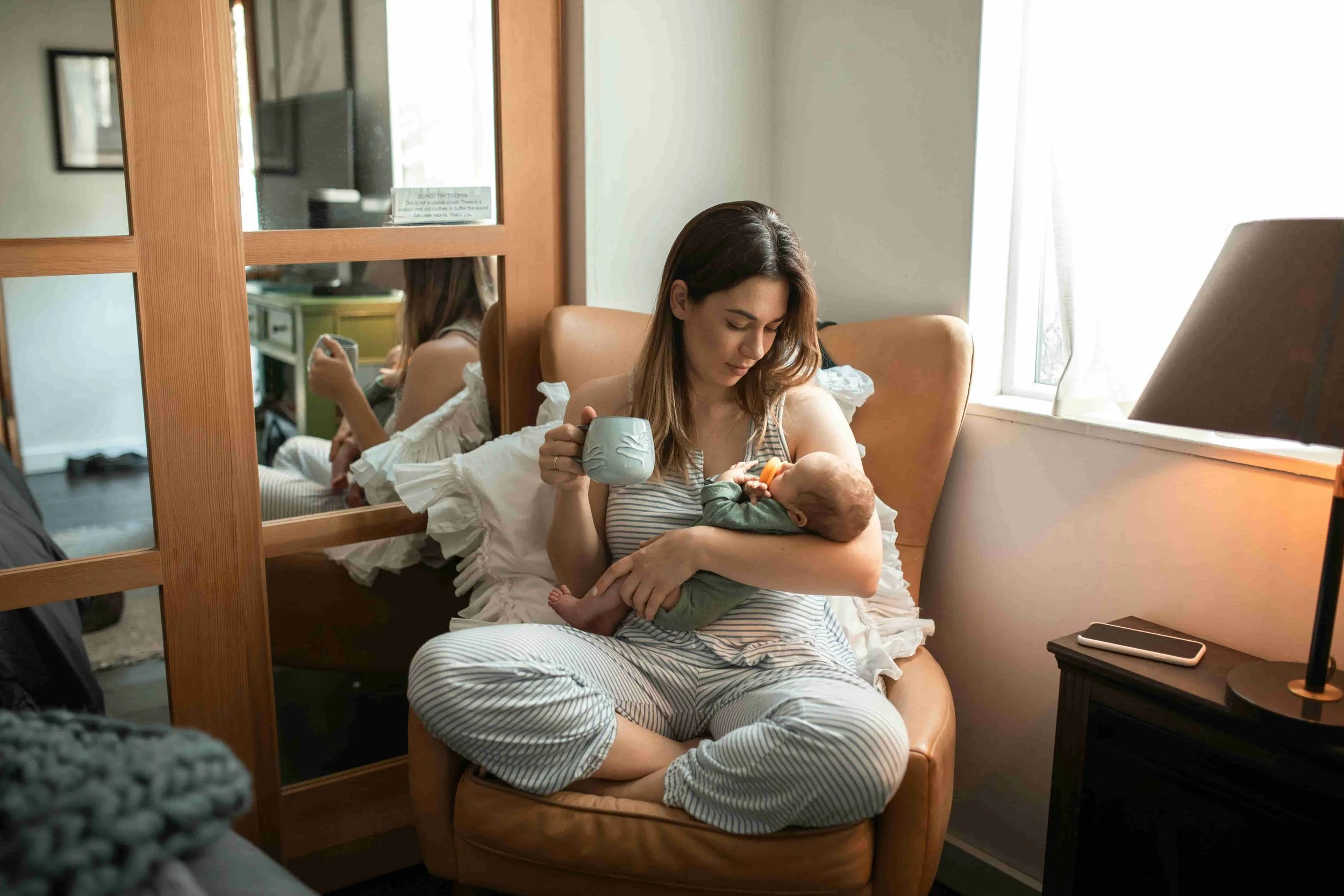
Postpartum Overwhelm
It just all feels like too much
Caring for baby while managing the demands of daily life can quickly become overwhelming. Many mothers describe feeling like they are constantly behind, overstimulated, or emotionally flooded.
You might feel like there is always something that needs your attention- feeding schedules, sleep struggles, household responsibilities, and the endless mental list of things to remember.
Therapy for postpartum offers a space where you can pause, process what you’re carrying, and begin to find ways to make this season of life feel more manageable.

Postpartum Rage or Irritability
You suddenly find constantly frustrated and snapping on a dime
Some mothers are surprised by how much anger or irritability they feel after having a baby.
You might notice yourself snapping at your partner, feeling frustrated by your baby’s crying or experiencing outbursts of anger that feel unlike you.
Postpartum rage often develops when exhaustion, nervous system overload, and immense pressure build up without space for relief. In therapy, we can explore what is happening underneath these reactions and help you respond to these emotions with understanding rather than shame.
Feeling Disconnected From Your Baby
You can’t help but think something must be wrong with you
Many mothers expect to feel an immediate bond with their baby. When that connection doesn’t happen right away, it can be deeply confusing and painful.
You may find yourself wondering why you don’t feel the way you thought you would, or worrying something is wrong with you.
Bonding can take time, especially when you are navigating exhaustion, anxiety, or a difficult birth experience. Therapy can provide a safe space to talk about these feelings openly (without judgment) and support the gradual development of connection to your baby.

Intrusive Thoughts After Baby
Scary and dark thoughts are suddenly popping up
Intrusive thoughts are surprisingly common during the postpartum period. These thoughts might involve sudden images or fears of something bad happening to your baby, even though you would never want that to occur.
For many moms, these thoughts feel frightening or shameful. In reality, intrusive thoughts often reflect how deeply you care about keeping your baby safe.
Postpartum therapy can help you understand why these thoughts happen and learn how to respond to them without becoming trapped in cycles of fear or self-judgment.
Postpartum Anxiety
You feel anxious, overwhelmed, and constantly on edge.
You may notice your mind constantly racing with worries about your baby. Even when your baby is sleeping peacefully, it can feel difficult to relax.
Postpartum Anxiety often shows up as persistent worry, racing thoughts, or feeling like your nervous system is always on high alert. You may feel responsible for anticipating every possible risk or potential negative outcome.
Postpartum therapy can help you understand why your anxiety feels so intense and support you in learning ways to calm your nervous system and reduce constant worry.
here’s the thing:
You’re not failing. You’re overwhelmed, under-supported, and doing your best.
Why the Postpartum Period Can Feel So Emotionally Intense

The transition into motherhood places enormous demands on your body, brain, and nervous system.
After birth, your body is recovering physically while hormones shift rapidly. At the same time, sleep deprivation makes emotional regulation much more difficult. You are also adjusting to a completely new identity and set of responsibilities.
San Diego can add its own layer of pressure. It's a city of high achievers, a thriving military community, and a culture that prizes looking like you have it together. Many moms here feel pressure to appear grateful, joyful, and capable during this time. When the reality of motherhood includes exhaustion, frustration, or emotional distress, it can create a painful sense of isolation- even in a city of 1.4 million people.
Understanding what is happening internally can help you recognize that your emotional responses are not signs you are failing, but natural responses to a profound life transition.

Therapy for Moms in San Diego- from your home
I'm Melissa, a Licensed Marriage & Family Therapist (LMFT #52656) and Certified EMDR Therapist based in the Carlsbad–San Marcos area of North County San Diego. I specialize in postpartum mental health, birth trauma, and the overwhelming emotional demands of early motherhood.
All sessions are conducted online via secure video- which means no commute on the 5 or the 15, no hunting for parking, and no arranging childcare just to get an hour of support. Many of my San Diego clients attend sessions from their living room, their bedroom, or even their car parked in the driveway during a rare quiet moment.
Because I'm licensed in California, I can work with any mom physically located in the state — including anywhere in San Diego, whether you're in North Park, Pacific Beach, Mission Valley, Kearny Mesa, Chula Vista, La Mesa, El Cajon, or anywhere else in the county.
I am in-network with UnitedHealthcare/Optum and Aetna. If you have different insurance, I can provide a superbill for possible out-of-network reimbursement. My session fee is $200 for a 50-minute session.
Some sessions may focus on understanding patterns of anxiety or overwhelm. Others may explore the emotional impact of birth, the pressures of motherhood, or the changes you are navigating in your identity and relationships. Over time, therapy can help you feel more grounded, emotionally supported, and confident in your role as a mother.


Let’s make space for you in this season of motherhood
Therapy for postpartum can help you feel more calm, confident and present.
Postpartum therapy provides a space where you can begin to understand your emotional experience with greater clarity and compassion.
In our work together, therapy may focus on:
understanding the emotional and nervous system changes happening after birth
developing tools to manage anxiety and overwhelm
processing difficult birth experiences
navigating identity changes that come with motherhood
building self-compassion during a demanding season of life
Therapy isn’t about becoming a perfect mother. Instead, it’s about helping you understand yourself more deeply and feel more supported as you move through this transition.

What Therapy Sessions Look Like
I provide postpartum therapy through secure video (telehealth) sessions, allowing you to access support from the comfort of your home.
Many moms appreciate being able to attend therapy without needing to arrange childcare or leave their baby. Sessions create a space where you can speak openly about what you’re experiencing without fear of judgment.
Some sessions may focus on understanding patterns of anxiety or overwhelm. Others may explore the emotional impact of birth, the pressures of motherhood, or the changes you are navigating in your identity and relationships.
Over time, therapy can help you feel more grounded, emotionally supported, and confident in your role as a mother.

Find your spark again- in motherhood and in yourself.
You can feel better and be the mother you always wanted to be.
Questions?
FAQs
-
All sessions are conducted online via secure video. As a therapist licensed in California, I can work with any mom physically located in the state- including anywhere in San Diego County. Online therapy is especially well-suited for postpartum moms because there's no commute, no childcare needed, and no added pressure on an already full schedule.
-
Being a mother changes you in every way. Who you are after having children will never be the same as who you were before. There are very unique needs and pain points during the postpartum time and it's very important for a therapist to have the knowledge and awareness of this.
My specialization of working with mothers takes in consideration how much being a mother impacts you and how becoming a mother can be an amazing opportunity for growth for ourselves. Motherhood is really hard, it can bring up a lot of unresolved things from our past, it highlights our insecurities, it challenges us in so many ways. Motherhood is also beautiful, it is a love like no other, it gives us strength and courage to do hard things, we also shape the future through our children.
By having a therapist that has a lens of seeing you as not just an individual but also as a mother and the impact that has on you, you can have a better understanding of your needs and struggles. As a mother myself, I can understand many of the struggles and challenges that come with motherhood. I also know that your experience of motherhood is unique to you and I want to support you in feeling happy and confident in your own motherhood journey.
-
No, there are some restrictions and other factors that may make me not a good fit to be your therapist.
Due to licensing regulations I can only provide therapy to anyone that is physically located in California at the time of our sessions. You are located outside of California, you’ll need to find a therapist licensed in the state you’re in.
Also, online therapy is not appropriate for everyone. If you are experiencing severe symptoms such as seeing things or hearing voices that aren’t there, if you feel that you cannot keep yourself safe, or keep others safe from your behaviors, then it is imperative that you get immediate and urgent care. You can contact the National Crisis line at ‘988’ for resources, call 911, or go to the nearest emergency room.
-
What is most important for me is for you to feel heard and understood. A really important aspect of therapy is the relationship between therapist and client. I view myself as like a guide. I will share my understandings and knowledge of things and may make some suggestions. Ultimately you know your life best and it's always up to you on what direction we go in.
My therapy style is a mix of providing support, exploring past experiences to gain insight into current struggles and offering strategies to help you put into action the things you are wanting for yourself.
In my therapy, I use a combination of CBT (Cognitive-Behavior-Therapy), Psychoeducation, and Mindfulness-based practices. I also like to look at the person as a whole- mind, body, and soul. There are so many aspects that go into our mental health that it's important to be open in exploring all different parts of ourselves.
My hope is that at the end of our therapy session you not only feel seen, heard, and understood, but that you also have some direction on what to do to help yourself.
-
Yes, having some anxiety and worrying about your baby's wellbeing is a normal aspect of parenting. Our brains are "wired" for our survival, including our children's. It's natural to have more worries come up of things that may cause harm for your baby in order to help you be more "prepared."
With that said, this worrying and anxiety can easily become an issue when it starts to interfere with our normal day-to-day lives. Are you finding that you are not able to do basic things (such as go for a walk outside, sleep, leave your baby with your partner or other trusted loved one, etc.) because you are so worried about their safety? Are you consistently troubled with thoughts of yourself, partner or baby dying or having something horrible happen to them/you? These may be signs of Postpartum Anxiety and it's important to get treatment.
Worries and anxiety about the well-being of our baby and family can continue beyond the postpartum time. Many times we attempt to manage our worries by trying to assert control over every aspect of our lives. This can quickly create burn-out within ourselves, cause friction in our relationships and can create difficulties for our children to be more independent.
You don't have to suffer from anxiety in silence. Help is available to you. Therapy is a great place to process your anxiety and learn ways to better cope and manage it.
-
You don’t need a formal diagnosis to seek support. If you’re feeling anxious, overwhelmed, exhausted, disconnected, or just not like yourself since becoming a parent, therapy can help. Postpartum therapy isn’t just for those with Postpartum Depression- it’s for anyone navigating the emotional, mental, and identity shifts that come with this season. You deserve care simply because you’re struggling, not because you’ve “checked all the boxes” for a diagnosis.
-
It doesn't change whether you're eligible to work with me, but your birth experience absolutely matters in our work together. Where you delivered, how that experience went, and what you're still carrying from it are all things we can explore in therapy. Birth trauma is a real and treatable condition, and you don't need a dramatic story for it to be valid.
-
Of course! Therapy is a service for you. You know best what is coming up for you in your life. My role is to help you sort through it, develop a better understanding of what may be going on and then to help you make any needed to changes to better help yourself.
-
Absolutely. You're welcome to feed, bounce, or soothe your baby during sessions. Online therapy is designed to meet you where you are and that includes the very real demands of life with a little one.
-
My session fee is $200 for a 50-minute session. I am in-network with UnitedHealthcare/Optum and Aetna. If you have different insurance, I can provide a superbill for possible out-of-network reimbursement.
-
If you have more questions or want to meet me first, we can schedule a consultation. Consultations are free and are for 15 minutes by phone or video. From there you can decide if you want to move forward to schedule for a therapy session.
If you are ready to schedule right to a therapy session, great! Both options (consultation and therapy session) are available to schedule in the button below.
Once you schedule a consult or session, you will get a confirmation email with the information on how to access the appointment.
Get Support
Get Support